
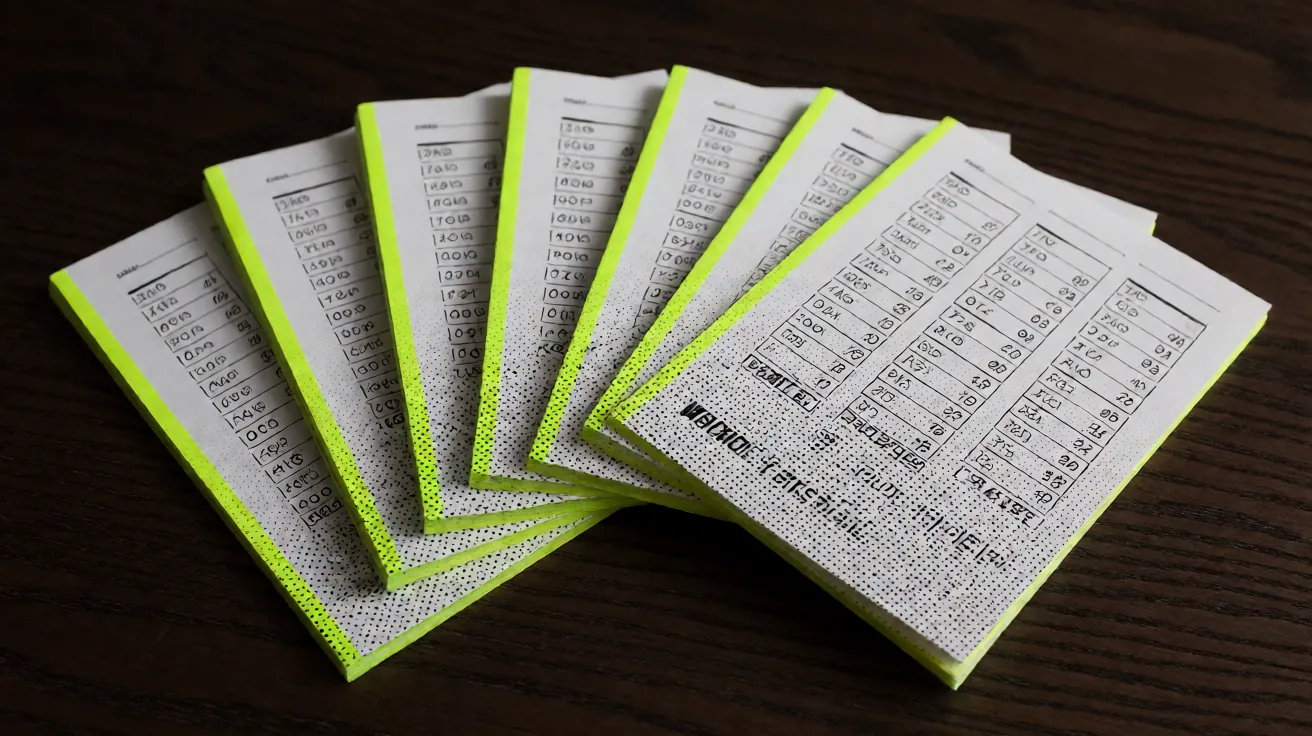
Multi-race wagers let you chain winners across consecutive races into one ticket — and the payouts can dwarf anything you'd see on a single-race bet. The trade-off is that every leg must hit, which makes sequencing your picks carefully the whole game.
Horse Racing Bet Types: Win, Place, ShowWhat are Pick 3, Pick 4, and Pick 5 bets?
Each is a horse racing bet type that covers a fixed number of back-to-back races at a single track. Pick 3 covers three, Pick 4 covers four, and Pick 5 covers five consecutive races. You select at least one horse per leg before the first race goes off. If every one of your selections wins, you collect.
The minimum bet per combination is typically $0.50, which is lower than the $2 floor common on single-race exotics. That lower floor matters once you start spreading across multiple legs.
How much does a multi-race ticket actually cost?
Cost multiplies fast. Suppose you're playing a Pick 3 with two horses in race one, one in race two, and three in race three. That's 2 × 1 × 3 = 6 combinations. At $0.50 per combo, your ticket costs $3. Bump the base to $1 and the same ticket is $6.
Contrast that with a single-race exotic. A trifecta or superfecta can get pricey quickly — a 6-horse trifecta box covers 120 combinations at $2 each, totaling $240. Multi-race wagers with a $0.50 base give you spread without that kind of upfront commitment.
What takeout should I expect?
Multi-race pools carry roughly 22% takeout on average. That means for every dollar wagered into the pool, about $0.22 goes to the track before winnings are distributed. Pari-mutuel pool math means the remaining funds are split among all winning tickets — so a smaller field of winners makes each winning ticket worth more.
Win/Place/Show pools run closer to 16–17% takeout, so multi-race bets cost you more of each dollar before the pool pays out. Keep that in mind when sizing your tickets.
How do I structure my picks wisely?
I like to think of each leg as a confidence rating. Single out the legs where I feel most sure, and use singles there. Spread wider (two or three horses) in the legs where the race looks wide open. This controls cost while keeping me live in the confusing races.
- Single: one horse in a leg you're confident about — keeps ticket cost low.
- Double: two horses in a leg where two runners look equally strong.
- Part-wheel: spreading three or more horses in a wide-open leg to stay alive.
Always total your combinations before placing the ticket. Most ADW apps show a live ticket cost calculator as you add selections — use it.
Are multi-race wagers legal everywhere online?
Online ADW is legal in roughly 40 states; Alaska, Georgia, Hawaii, Mississippi, South Carolina, Utah, and Nevada (online) do not permit it. Check the state-by-state ADW guide for your specific state before funding an account. Minimum age is 18+ in most states, though Iowa, Washington, and several others require 21+.
Must be 18+ (21+ in select states). Gambling problem? Call 1-800-GAMBLER.
Do multi-race winnings trigger a tax form?
Yes, under the same rules as any other horse racing bet. A W-2G is issued when winnings are 300-1 or greater and pay at least $600 — and under modernized IRS rules, the entire amount wagered (not just a $2 base) is used to calculate whether that threshold is met. A $6 Pick 3 ticket must pay more than $1,800 to trigger reporting. See the full breakdown on IRS W-2G reporting thresholds.
Which platforms offer Pick 3, 4, and 5 pools?
All major licensed ADWs carry them. TwinSpires streams simulcast races from hundreds of tracks and surfaces multi-race sequences prominently in its app. TVG, DRF Bets, NYRA Bets, and DK Horse all offer the same pools. For a head-to-head look at two of the biggest, see the TVG vs. TwinSpires comparison.
My own routine: I pick the Pick 4 sequence at a track I know well, cap my total ticket cost at $20, and treat any payout above that as a win for the entertainment budget. Multi-race wagers are fun precisely because small tickets can return large payouts — just don't chase them with money you can't afford to lose.